Find Who Owns a Queens County Property
Begin with the street address and resolve it to a Queens BBL. Read the parcel profile next, then open the latest deed image to confirm. That order protects you from costly mistakes. It keeps you from mistaking a mailing name, a mortgage party, or a similarly named person for the true property owner. Defensible answers come from the sequence, not from a single screen.
Normalize it in PIP.
Preserve borough 4, block and lot.
Open the latest ACRIS conveyance.
Check entity, court or probate records if needed.
Write down when you pulled each record. Wording matters too. "Owner label displayed," "owner named in latest deed," and "current owner verified" are three different conclusions, not interchangeable ones.
Compare Queens Owner Sources
Every official Queens source names parties for its own reason, from deed records to the tax roll, so keep each role attached to the result you cite.
| Source | Name shown | Weight |
|---|---|---|
| ACRIS deed image | Grantor and grantee | Recorded conveyance evidence |
| Property Information Portal | Displayed owner label | Parcel-profile evidence |
| Tax account | Recipient or account name | Administrative context |
| DOS entity search | Entity and service contact | Identity corroboration |
| Directory | Historic listed person | Historical context only |
Verify the Latest Queens Deed
Pull up ACRIS by borough, block, and lot. Then open the likely deed. Compare the unit, legal description, document date, recording date, and parties. Look around that result for corrections, referee deeds, estate deeds, and same-day entity transfers. ACRIS indexes far more than conveyances. A party row alone is not title. Grantor, grantee, and mortgagee play different roles. Keep the CRFN or document ID and note the image status.
The ACRIS parcel-search source shows the BBL fields used for Queens.
Investigate a Queens LLC Owner
A grantee that is an LLC needs a second look. Search the exact legal name through the New York Department of State. Formation date, jurisdiction, status, service address, and filing history separate lookalike companies. A registered agent is not the beneficial owner. The agent is not the occupant either. Nor is the agent the property address. Return to ACRIS for the entity's deed role and date. If spelling or formation timing conflicts, report the discrepancy rather than joining records by assumption.
Handle Queens Trust and Estate Ownership
A trust name or fiduciary deed calls for the recorded instrument itself. Wills, letters, or a Queens Surrogate's Court decree can establish authority. The conveyance still has to match the BBL. It must also match the legal description. Search ACRIS both before and after the death or estate event for missing links. Keep personal details that bear no relation to the parcel out of anything you publish.
Use Court Files to Resolve a Queens Conflict
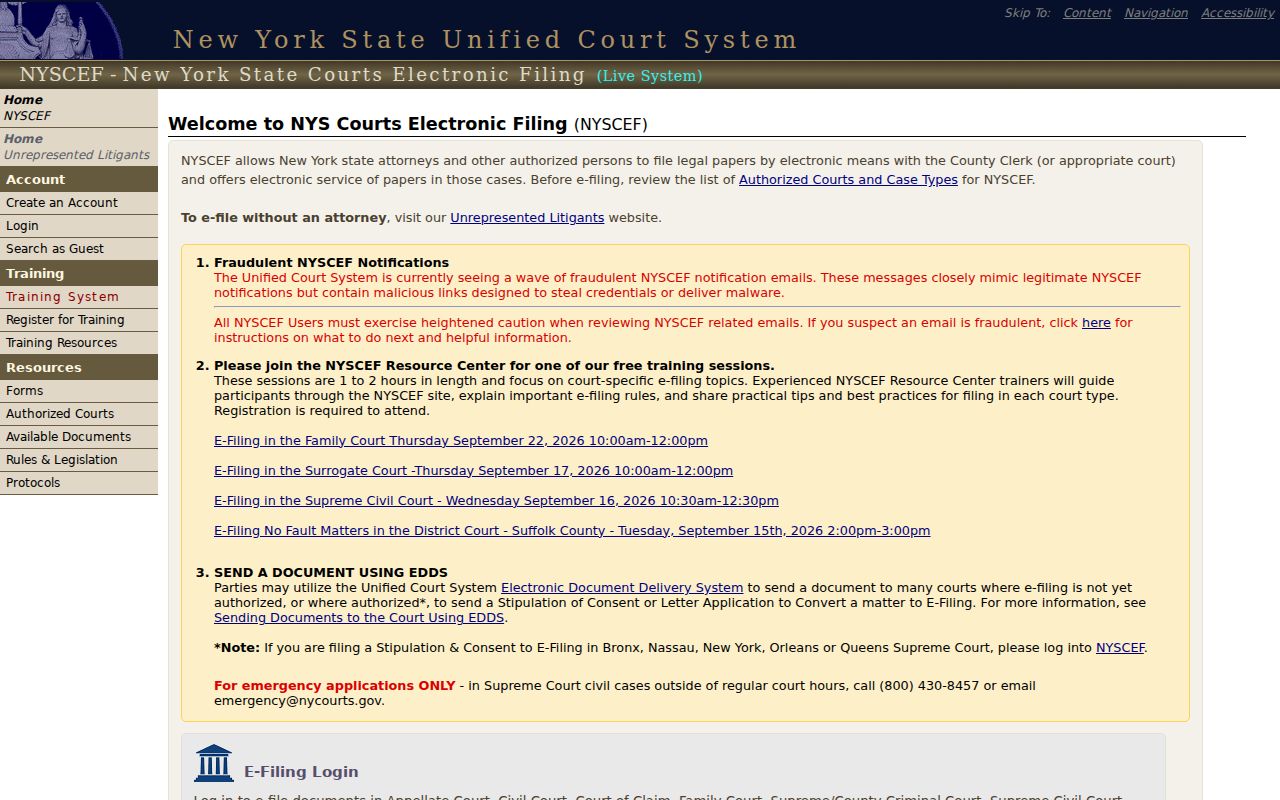
Foreclosure, quiet-title, fraud, and judgment cases can rewrite the apparent chain. Read the complaint, lis pendens, orders, judgment, and disposition yourself. A docket listing alone never proves a sale took place.
The NYSCEF guest-search source illustrates a property-related case lead.
Do Not Treat Occupancy as Ownership
Occupancy is not title. A tax mailing address, directory entry, voter record, or housing record establishes nothing about ownership. Co-ops complicate things further. An apartment interest there may rest on shares. It may also rest on a proprietary lease rather than a unit deed. State exactly what each source shows. Never infer family ties, residence, or control from a shared address or surname.
Check the Queens Fraud-Alert Route
Notice of Recorded Document alerts registered parties after covered filings. It cannot block, insure, invalidate, or correct a deed. Suspicious filings call for preserving the CRFN, the image, the date, and the property match. The next step is using official and legal channels. Queens fraud prosecutions announced in 2025 and 2026 underline the point. Inspect the instrument rather than trusting an index label.
Respect Owner Privacy and Search Limits
Protected-address programs, redactions, and data-purpose rules carry real weight. Public access never authorizes stalking, harassment, or publishing sensitive personal details. Remember too that a property record says nothing about mortgage payoff, equity, or who sits inside the home.
Ownership boundary. Use official records for lawful parcel research and obtain professional title help when ownership is contested.
Resolve a Queens Owner-Name Mismatch
Mismatch between the PIP label and the latest deed has routine explanations. Compare dates and the exact BBL first. Then hunt for a later deed, a correction, a referee deed, or an estate conveyance. A condo unit, base lot, or predecessor lot often explains the conflict. Follow the court docket instead of assuming a complaint changed title. Match entity variations against the deed and the DOS record. Tie any trust or estate to its stated authority. When evidence still conflicts, publish both sourced observations. Mark ownership unresolved rather than picking the name that simply looks current.
Prepare a Queens Owner Finding for Review
A clean owner finding starts with the normalized address and BBL. Next, name each source and every party's precise role in it. Cite the latest deed's identifier, document type, date, and image status. State plainly whether the legal description and unit match. Add the PIP label as corroboration. Never use it as a silent replacement for the deed. Cite court, probate, entity, or archival evidence separately, and explain what each contributes. Close with the search date. Note one boundary: the finding identifies the best-supported owner of record, not a title opinion. That structure lets a reader separate direct evidence from context and see what remains unresolved.
Keep Voter Data Out of an Owner Conclusion
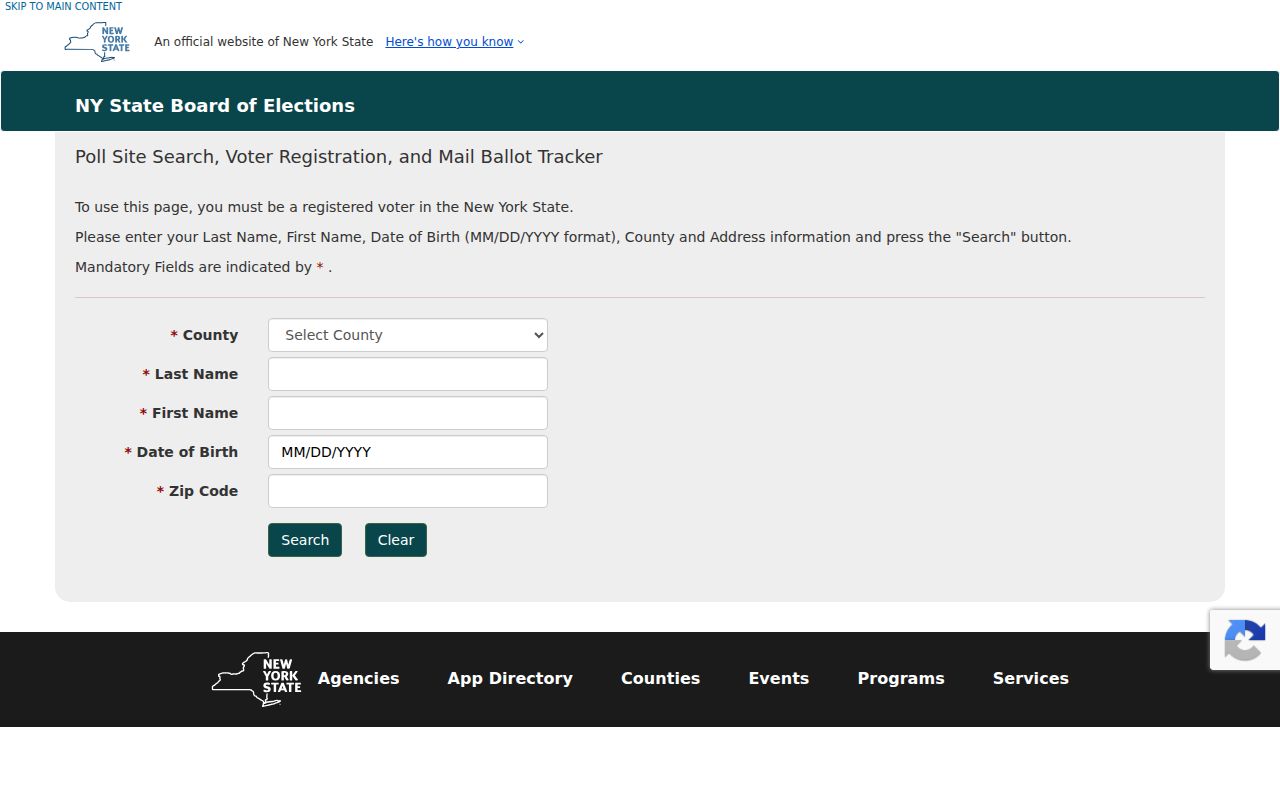
New York's voter lookup requires a voter's own county, name, birth date, and ZIP in a registration-check context. It is not a property-owner search. Voter-list access carries its own purpose limits. Never use a voter result to paper over a gap in ACRIS or PIP evidence.
The official New York voter lookup shows the registration fields and confirms why the tool is outside the ownership chain.