
Compare the Values on a Queens Property Record
A Queens property value is not one number. It is several numbers with different jobs. The Finance Department's Property Information Portal is the usual starting point, yet its market estimate, assessed value, and taxable value are not interchangeable, and none equals the recorded sale amount on a deed.
| Value | Meaning | Recorded in |
|---|---|---|
| Market value | Finance estimate under its valuation process | PIP assessment panel |
| Assessed value | Value after class ratio and rules | PIP and assessment notice |
| Taxable / billable value | Value after applicable adjustments | Finance tax records |
| Last sale amount | Transaction field tied to a filing | ACRIS and PIP sales panel |
| Appraisal | Professional opinion for a stated purpose | Not supplied by the public portal |
Look Up a Queens Assessed Value
Resolve the address to a Queens BBL first. Confirm borough 4, block, lot, unit, property class, and the tax year. Record market, assessed, and taxable values separately. Note exemptions as well. Never copy an unlabeled number, and compare the building, land, and tax-map history panels before trusting any trend, since a changed lot or class can make figures non-comparable.
Understand Effective Market Value
Finance market value is an estimate. It is not a recorded sale price. Effective market value leans on ratios and tax rules, while statutory caps and transition mechanisms can hold assessed values down, and the method shifts with property class. State the source year and the methodology. A percentage pulled from another class or fiscal year produces a false comparison.
Apply Queens Class 1 and Class 2 Differences
Class 1 and Class 2 properties are treated differently. Ratios, caps, and transition rules all diverge between them. A small home and a larger rental or cooperative property should never share one shortcut comparison. Use current Finance publications, name the fiscal year, and remember that rates and rules change, so a prior year's calculation belongs only to that year.
Read Queens Sales as Recorded Activity
Sales context lives in PIP and ACRIS. Open the deed image itself. Check document type, parties, BBL, unit, dates, and amount, because an estate, entity, partial-interest, corrective, or foreclosure deed may not reflect an ordinary open-market sale.
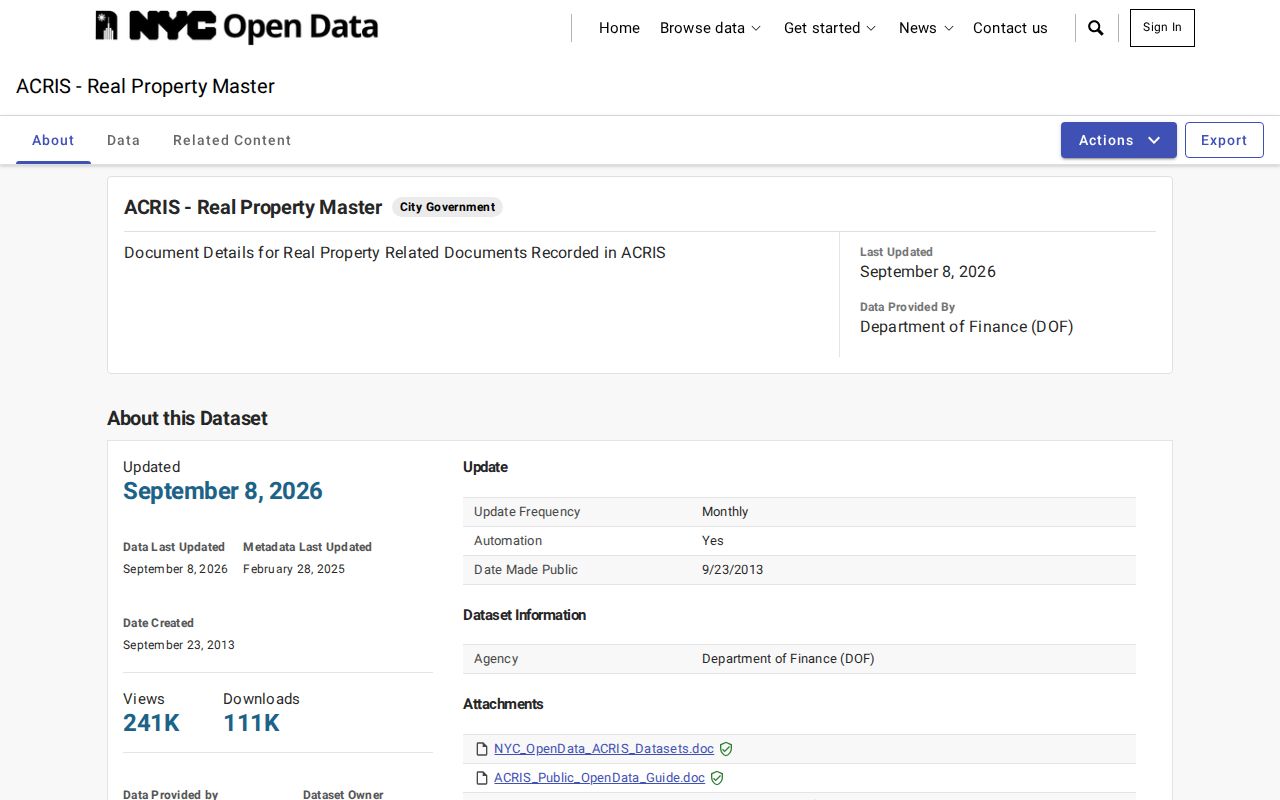
The ACRIS master dataset shows document, amount and recording fields used in sale research.
Separate Exemptions from Abatements
Exemptions and abatements both shrink a tax bill. STAR, senior, and disability exemptions reduce assessed or taxable value under their own rules, while abatements reduce the tax after it is calculated. Neither is a discount on the sale price. Record the benefit and its year, since eligibility rules and deadlines change and some applicant information stays protected.
Account for Queens Tax Lot Changes
Mergers and subdivisions can break a year-to-year series. Tax-map history and older deeds tell the story. They show whether values belong to the same legal parcel, and condo conversions can create unit lots only after a base-lot period.
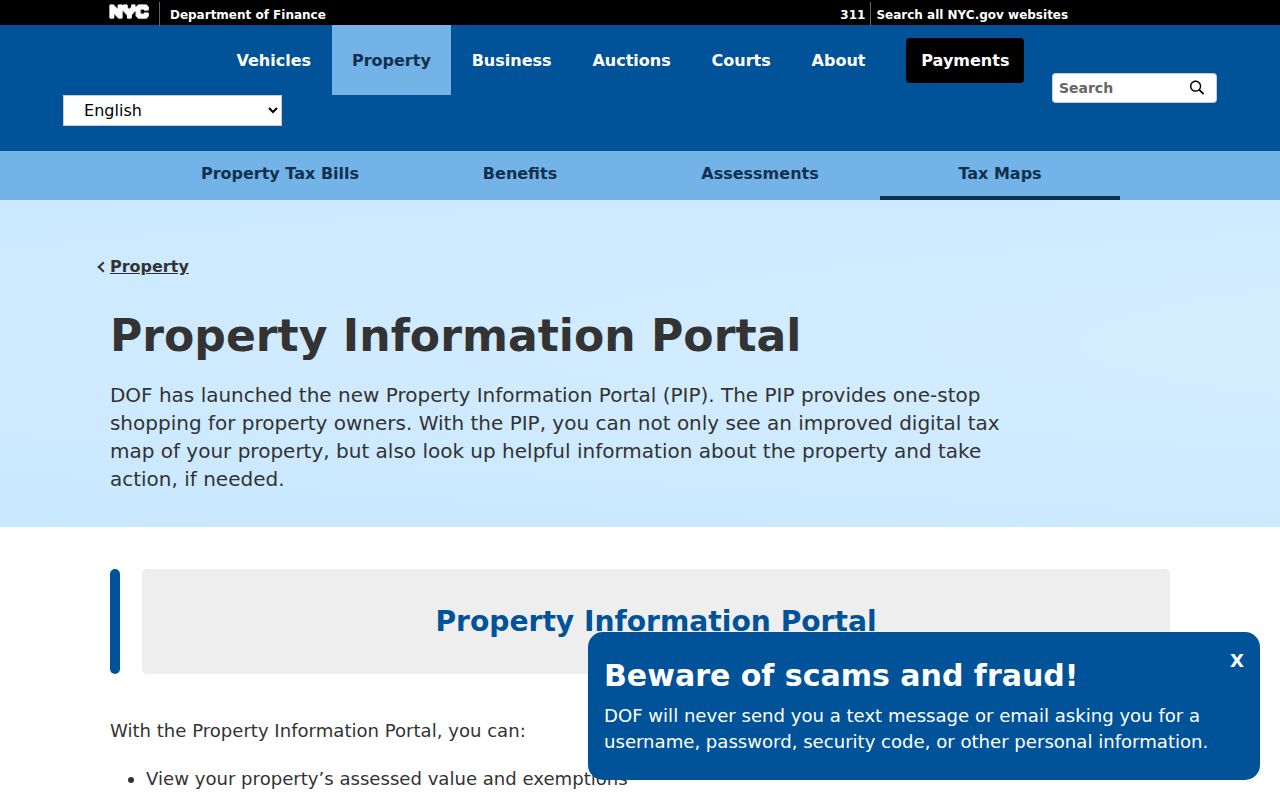
The Digital Tax Map source displays Queens lot geometry and map history.
Use Neighborhood Context Carefully
Queens markets vary block by block. A neighborhood label is not a valuation model. Jackson Heights garden courts, Sunnyside Gardens shared landscapes, Addisleigh Park history, and Douglaston Hill's low-density pattern each demand parcel-level comparison. Zoning and historic designation may explain context. They do not supply a sale price or prove that a particular deed contains a restriction.
Do Not Infer Equity or Debt
A mortgage recording shows an original amount and date. It says nothing about a current payoff. A satisfaction closes one recorded mortgage but leaves private obligations hidden, so subtracting an old mortgage amount from a public value is not an equity calculation. Value fields prove neither ownership nor occupancy. Keep the owner of record, the deed, the assessment, and the debt questions firmly separate.
Limits of a Queens Property Value
Public values help with tax research. They are not appraisals. An assessment cannot account for every condition, lease, interior change, title issue, or market term, and it is no guarantee of sale proceeds.
Value boundary. Cite the value type, effective year and source; use a qualified appraiser when a defensible current opinion is required.
Build a Queens Value Comparison
Compare only similar properties. Class, use, form, and year should match. Preserve each BBL and note exemptions, lot changes, condo status, and unusual transfers. A nearby parcel can mislead you. It may belong to another class or carry development rights worth far more than its land. Show market, assessed, and taxable values as separate series, add sale amounts only after reviewing deeds, and state gaps so the tax series is not mistaken for a prediction of sale price.
Date Every Queens Value Statement
A useful value statement names the field. Add the tax year, source, and retrieval date. When a sale is included, add the deed type and recording date as well. Name the exemption's benefit year without exposing protected applicant details. Labels prevent readers from combining figures from different periods. Recheck the official Finance portal before a tax appeal, transaction, or other time-sensitive decision, because assessment data, rates, and account activity can all change.