
Capture the Queens Current Owner Record
A proper current-owner record keeps its source and date attached, never a bare name pulled from one screen.
Record the parcel key first: Queens borough 4, plus block, lot, and unit where one applies. Note the profile label exactly as the Property Information Portal displays it. Then capture the latest instrument, meaning the ACRIS CRFN or document ID, its type, and its recording date, along with a verification pass on legal description, party role, and any unresolved conflicts.
The PIP label is a convenient shorthand. The deed image is the stronger source for any conveyance. Distinguish three levels in your notes: a likely owner label, an owner actually named in a deed, or a fully reconciled current record that matches across sources.
Resolve the Address to a Queens BBL
Search the NYC Property Information Portal by address first. Copy the standardized address and the BBL. Remember that Queens uses borough code 4 and that zero padding and unit distinctions matter. One wrong digit can pull up a plausible but entirely unrelated owner. Check the tax-map history as well. Mergers and subdivisions change lot numbers over time. Older deed records often cite predecessor lots, so a changed number needs a documented bridge before you trust it.
Confirm the Queens Owner in ACRIS
Search ACRIS by parcel and open the most recent conveyance. Compare the legal description, unit, grantor, grantee, document date, and recording date line by line. Watch for corrections, referee deeds, estate deeds, and transfers among related entities. Never grab the newest party row without reading its role. A mortgagee or assignor is not the deed grantee.
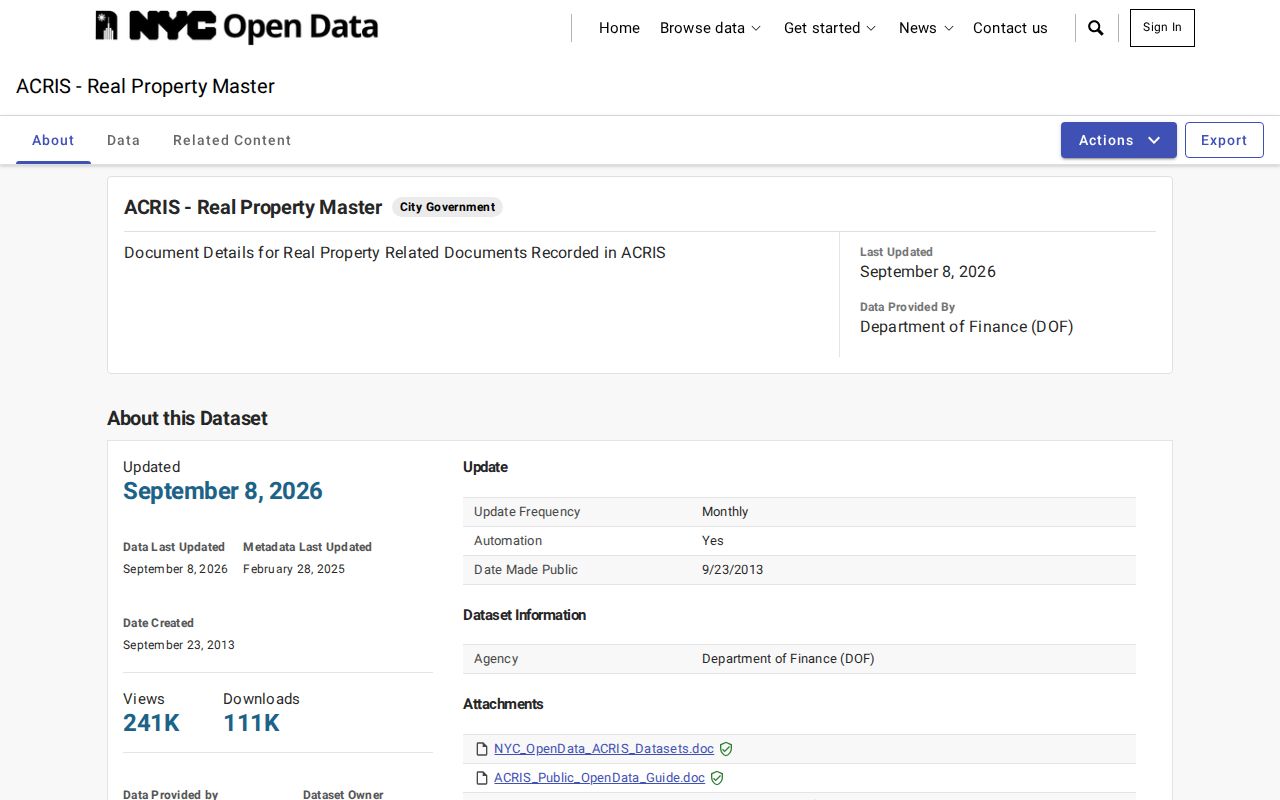
The ACRIS master index source shows the recording fields used to cite the latest instrument.
Check Corrections and Nonstandard Transfers
Not every transfer is an ordinary sale. A confirmatory deed may repair a mistaken name or description. An executor, administrator, or referee deed can reflect probate or foreclosure instead. Transfers between related entities get recorded without any market transaction behind them. Read the document type and recitals before describing what happened, and when an earlier deed appears to still control, search subsequent filings and court records rather than assuming the parcel profile is wrong.
Verify a Queens Business Entity
When an entity appears as the owner of record, the New York Department of State database can confirm the exact name, formation date, jurisdiction, status, service address, and agent. Match the name character for character against the deed. Similar names are not interchangeable. Also remember that service-of-process details never identify a beneficial owner or principal place of business, so treat them as corroborating evidence only.
Review Queens Court and Probate Status
A lis pendens calls for a court check through NYSCEF or WebCivil. So does a foreclosure, quiet-title dispute, or fraud allegation. Follow the docket through its orders, judgment, and final disposition. A scheduled auction is not a completed transfer. For an estate, review WebSurrogate to confirm the fiduciary's authority. Then pair that result with the deed recorded afterward. Probate authority and property title are connected but distinct questions.
Handle Queens Condos and Co-ops
Condos complicate the parcel picture. A single search may involve base lots, unit lots, a declaration, and shared common elements. Co-ops work differently still. The apartment rarely maps to an ordinary unit deed. The interest lives in corporate shares and a proprietary lease. Describe the legal object the records actually show, comparing BBL, unit, building, and instrument class, rather than calling every apartment entry a deeded parcel.
Do Not Use Mailing Data as Title
Mailing data is not title. Tax bills go to one address. A registered agent sits at another. An HPD contact serves its own administrative purpose. None of them overrides the recorded conveyance by itself. A mortgage record, likewise, proves nothing about a current unpaid balance. When sources conflict, keep both dates. Name the next record that would settle the question. And never merge two people simply because their names or addresses look alike.
Protect a Queens Owner Search
The free Notice of Recorded Document program sends alerts after a document is recorded. That is its whole job. It does not prevent fraud, insure title, or correct a filing, so critical issues belong with the City Register, the appropriate court, and qualified counsel.
Current-owner limit. Report the exact source and search date, avoid occupancy claims, and never use owner information to harass a person.
Record Current-Owner Confidence
Confidence has levels. High confidence means a matching BBL and unit. It includes a deed image you have viewed and clear grantee language. There is no later conflicting conveyance, and a parcel profile lines up. Medium confidence may rest on an index-only entry or await a portal update. Low confidence shows a property mismatch, a missing image, an unresolved case, or an ambiguous entity. Write the search date beside the level. Status can shift with a later recording, and portals refresh on different schedules. Dating the work keeps the evidence transparent. It does not turn a property records review into a legal opinion.
Recheck the Queens Record After a Recent Filing
Recording and portal updates follow different schedules. When a deed was filed recently, save its CRFN and image right away. Then give the parcel profile time to catch up through the normal update path. An older label lingering on another screen does not make the new deed invalid. The reverse deserves equal care. Trace any new profile label back to a recorded instrument or a documented administrative basis. If no supporting filing appears in the index yet, say plainly that the profile changed. The conveyance is unsupported so far. Exact dates and source names let anyone revisit the mismatch later without guessing.